By Capt. Vijay | Founder & Mentor, RSA Pilot Academy
“Captain, apart from the flight training fee, how much money should I budget every month?”
This is one of the most overlooked questions in aviation.
Many students plan only for the cost of their Commercial Pilot Licence (CPL) but forget about the monthly living expenses that continue throughout training.
Poor budgeting can lead to financial stress, interrupted training and unnecessary delays.
Here’s how to plan your monthly budget like a professional.
Why Monthly Budgeting Matters
Pilot training is a full-time commitment.
Your monthly expenses continue whether you’re attending ground classes, waiting for flying slots or completing examinations.
A proper budget helps you:
- Avoid financial surprises
- Complete training without interruptions
- Reduce unnecessary spending
- Focus on learning instead of worrying about money
Think of budgeting as another part of your flight plan.
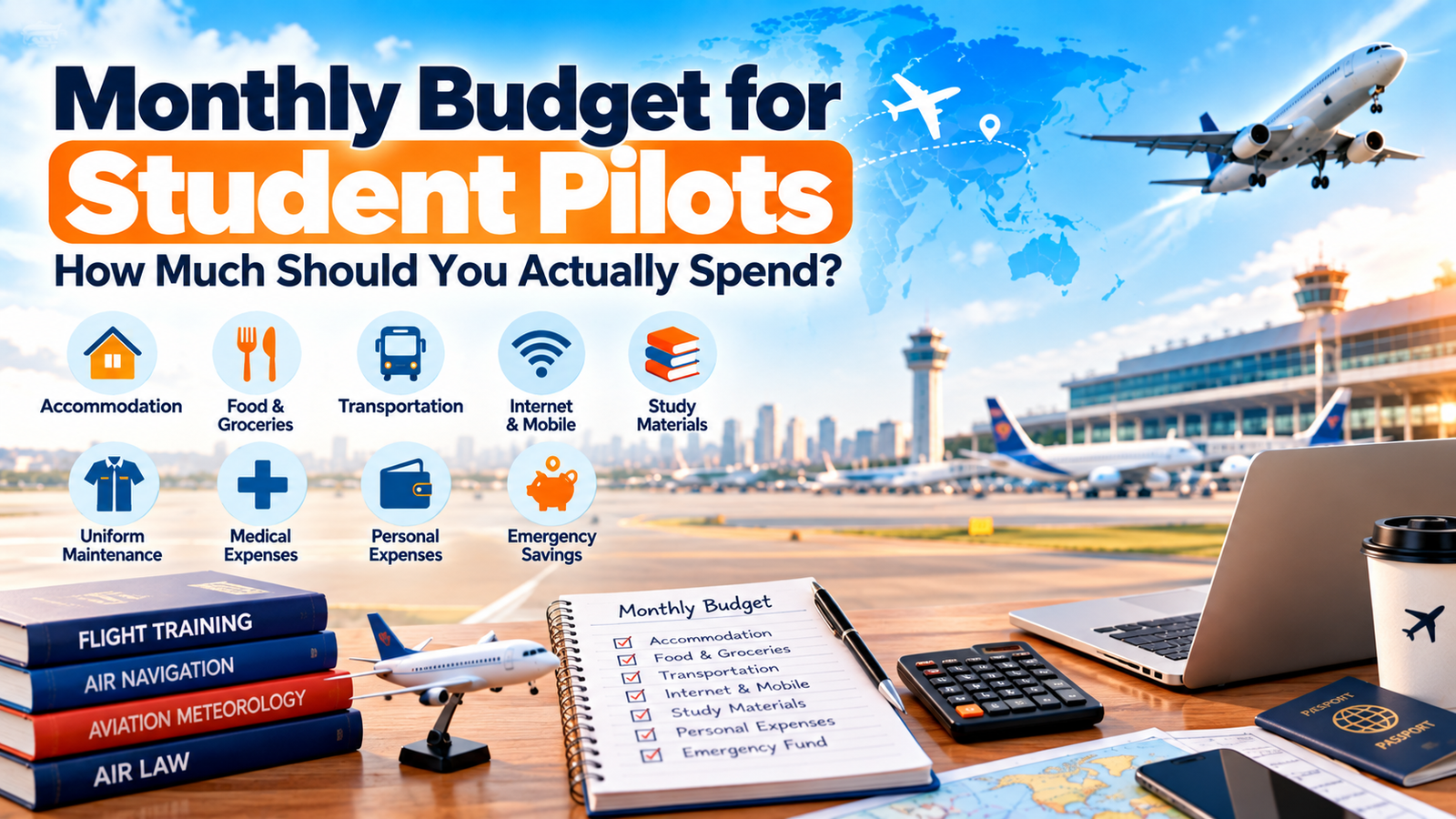
Typical Monthly Expenses for Student Pilots
While expenses vary by city and country, most students should plan for:
- Accommodation
- Food and groceries
- Local transportation
- Internet and mobile bills
- Study materials
- Uniform maintenance
- Medical expenses
- Personal expenses
- Emergency savings
Preparing for these costs in advance makes your training journey much smoother.
Create a Monthly Budget Checklist
Every student should divide expenses into three categories.
Essential Expenses
- Accommodation
- Meals
- Transportation
- Internet
- Utilities
- Study materials
These are non-negotiable and should always be prioritised.
Variable Expenses
- Eating out
- Entertainment
- Shopping
- Gym memberships
- Weekend travel
- Online subscriptions
These can be controlled depending on your financial situation.
Emergency Fund
Always keep a separate reserve for unexpected situations such as:
- Medical emergencies
- Licence documentation
- Additional examination attempts
- Travel changes
- Personal emergencies
A small emergency fund can prevent major disruptions during training.
Common Budgeting Mistakes
Many students spend more than necessary because they:
- Choose expensive accommodation without planning
- Frequently order food online
- Overspend on gadgets
- Ignore daily small expenses
- Fail to track monthly spending
- Depend entirely on family for unexpected costs
Good budgeting isn’t about spending less—it’s about spending wisely.
Budgeting Tips Every Student Should Follow
- Prepare a monthly budget before training begins.
- Track every expense.
- Differentiate between needs and wants.
- Avoid unnecessary debt.
- Build an emergency reserve.
- Review your spending every month.
- Stay financially disciplined throughout training.
Financial discipline is just as important as flying discipline.
Parents Should Also Plan
Parents should remember that training expenses extend beyond the initial course fee.
Discuss these topics before your child begins training:
- Monthly living expenses
- Emergency funds
- Banking arrangements
- Insurance
- Unexpected training delays
- Communication during financial emergencies
Open communication prevents unnecessary stress later.
Capt. Vijay’s Advice
I’ve seen many talented students struggle—not because they lacked flying ability, but because they underestimated their monthly expenses.
A well-planned budget allows students to focus on what truly matters:
Learning.
Flying.
Building a successful airline career.
Financial planning is part of becoming a professional pilot.
Frequently Asked Questions
Should I prepare a monthly budget before joining flight school?
Yes. A monthly budget helps you avoid financial stress and ensures that your training continues smoothly.
What should be included in a student pilot’s monthly budget?
Accommodation, food, transportation, internet, study materials, personal expenses and an emergency reserve should all be considered.
Should parents keep an emergency fund?
Yes. Unexpected expenses can arise during training, so maintaining a financial buffer is highly recommended.
Can poor budgeting delay pilot training?
Yes. Financial difficulties can interrupt training schedules, examinations and overall progress.
How RSA Pilot Academy Helps
RSA Pilot Academy helps students and parents prepare for the complete aviation journey—not just flight training.
Our guidance includes:
- Career counselling
- Flight school selection
- Education loan assistance
- DGCA Ground School
- Medical guidance
- Licence conversion planning
- Type Rating guidance
- Airline interview preparation
The goal is to help students begin training with realistic expectations and sound financial planning.
Final Thoughts
A successful pilot doesn’t just manage an aircraft—they manage responsibilities.
Your monthly budget is one of them.
Plan ahead.
Spend wisely.
Stay financially disciplined.
Because completing your training successfully is just as important as starting it.
Your Success Is Our Focus. Your Career Is Our Priority.