By Capt. Vijay | Founder and Mentor, RSA Pilot Academy
“Captain, what is the minimum qualification required to become a pilot?”
This question sounds simple, but the answer depends on the type of pilot licence and career you want.
A student who wants to fly recreationally follows a different pathway from someone planning to become a commercial or airline pilot.
For most students asking this question, the goal is an airline career. In that case, the most important educational requirement is clear:
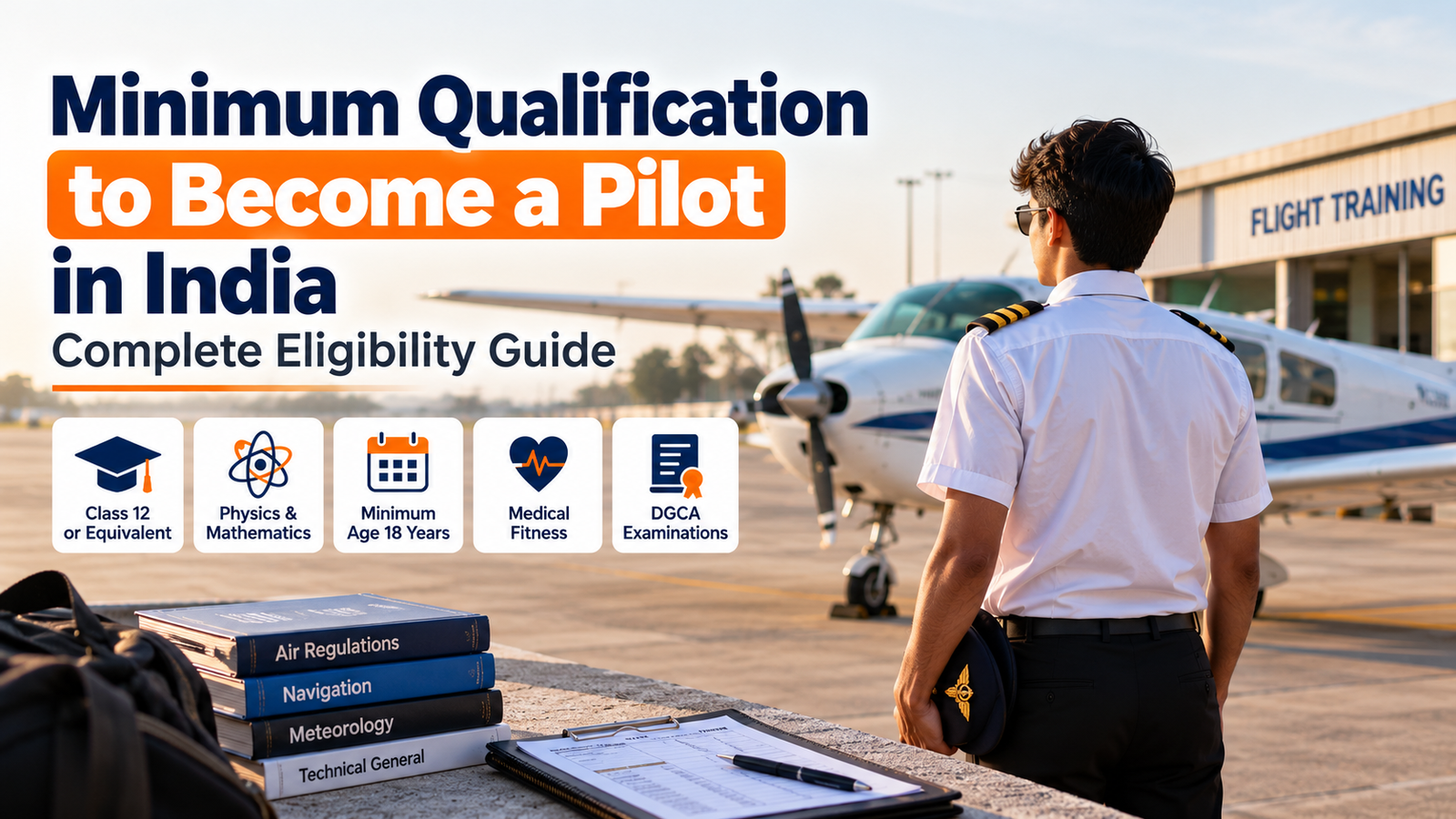
The minimum educational qualification for the standard Indian Commercial Pilot Licence pathway is Class 12, or an accepted equivalent, with Physics and Mathematics.
DGCA’s published requirements state that a CPL applicant must have passed 10+2 with Physics and Mathematics from a recognised board or university, or an equivalent examination. The minimum age for applying for a CPL is 18 years.
Quick Eligibility Checklist
| Requirement | Basic CPL Requirement |
|---|---|
| Education | Class 12 or equivalent |
| Required subjects | Physics and Mathematics |
| Minimum age | 18 years for CPL application |
| Medical fitness | Applicable DGCA medical standards |
| Examinations | Required DGCA flight-crew subjects |
| Flight training | Prescribed flying experience and skill tests |
| English | Adequate professional communication ability |
Educational eligibility is only the starting point. A student must also complete medical, examination, flying and licensing requirements.
Is Class 12 Compulsory to Become a Pilot?
For the standard Indian commercial-pilot pathway, you must have passed Class 12 or a recognised equivalent qualification with Physics and Mathematics. DGCA’s examination guidance also requires applicants outside the PPL category to provide proof of 10+2 Physics and Mathematics.
A university degree is not normally compulsory merely to begin CPL training.
However, individual:
- Airlines
- Cadet pilot programmes
- Universities
- Scholarships
- Overseas flight schools
may set additional academic criteria.
Always separate DGCA licence eligibility from programme-specific admission eligibility.
Can Arts, Commerce or PCB Students Become Pilots?
Yes.
Your original school stream does not permanently decide your aviation career.
However, students who did not complete Physics and Mathematics at the 10+2 level must usually complete the missing subjects through a recognised and accepted pathway.
For example:
- PCB students: Usually need Mathematics.
- Arts students: May need Physics and Mathematics.
- Commerce students: May need Physics and Mathematics.
- NIOS students: Can be eligible when the required subjects and documents meet the applicable requirements.
- Diploma students: Must verify whether their qualification is accepted as 10+2 equivalent with Physics and Mathematics.
Complete this verification before paying a flight-school deposit.
Is a Minimum Percentage Required?
DGCA’s published CPL educational requirement focuses on passing Class 12 with Physics and Mathematics. It does not prescribe a universal overall board percentage such as 60%, 70% or 80% for the standard CPL licence.
However, some cadet programmes or airlines may require:
- Minimum overall marks
- Minimum marks in Physics and Mathematics
- Minimum English marks
- Specific Class 10 or Class 12 performance
Therefore, a student may qualify for CPL training but not satisfy one particular cadet programme’s cut-off.
That does not end the pilot career. It may simply require a different pathway.
Is Science Required to Become a Pilot?
You do not necessarily need to have completed the full PCM stream.
The key subjects for the standard Indian CPL educational requirement are:
- Physics
- Mathematics
Chemistry is not listed as the core CPL educational requirement in the DGCA rule cited above.
Nevertheless, choosing PCM after Class 10 is often the most straightforward option because it includes both required subjects.
What Medical Qualification Is Required?
Academic qualification alone is not enough.
Professional pilots must meet the applicable aviation medical standards. Students should begin medical planning early, before making a major financial commitment.
Do not assume that:
- Wearing spectacles automatically disqualifies you.
- Being physically fit guarantees medical clearance.
- Internet advice can replace an aviation medical examination.
Medical eligibility must be determined through the proper DGCA-authorised process.
Minimum Qualification vs Airline Readiness
Meeting the minimum qualification makes you eligible to begin the professional pathway.
It does not make you airline-ready.
Airlines may later evaluate:
- CPL and ratings
- Medical fitness
- Technical knowledge
- Communication
- Aptitude
- Psychometric performance
- Simulator performance
- Professional attitude
- Background verification
The minimum qualification opens the first door.
Your competence determines how far you progress.
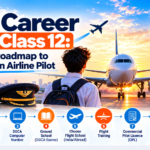
Step-by-Step Roadmap After Meeting the Qualification
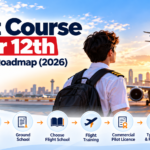
- Verify Class 12 Physics and Mathematics.
- Begin aviation medical planning.
- Apply for your DGCA Computer Number.
- Prepare for DGCA Ground School subjects.
- Choose a safe and efficient flight school.
- Complete prescribed flying and skill requirements.
- Apply for your Commercial Pilot Licence.
- Complete licence conversion if trained abroad.
- Prepare for Type Rating and airline selection.
DGCA Pariksha is the official portal used for flight-crew examination registration.
Common Mistakes Students Make
- Joining a flight school before checking eligibility
- Assuming any diploma is automatically accepted
- Ignoring missing Physics or Mathematics
- Confusing CPL eligibility with cadet-programme eligibility
- Delaying medical planning
- Depending only on question banks
- Believing a CPL guarantees airline employment
Accurate information at the beginning can prevent expensive delays later.
Frequently Asked Questions
Can I become a pilot after Class 10?
You can begin preparing, but the standard CPL pathway requires Class 12 or equivalent with Physics and Mathematics.
Is graduation required?
A degree is not generally compulsory for the standard CPL route, although individual airlines or programmes may impose additional requirements.
Can I become a pilot without Mathematics?
You can pursue the career after completing Mathematics at the required level through a recognised and accepted pathway.
Can NIOS students become pilots?
Yes, provided their Physics, Mathematics and supporting educational documents satisfy the applicable DGCA requirements.
What is the minimum age for CPL?
DGCA’s published requirement states that an applicant must be at least 18 years old on the date of application.
How RSA Pilot Academy Helps
RSA Pilot Academy supports students through:
- Educational eligibility guidance
- Pilot career counselling
- DGCA Ground School
- Aviation medical guidance
- Flight-school selection
- Education-loan assistance
- Licence-conversion planning
- Type Rating guidance
- Airline-selection preparation
The objective is to help students confirm their eligibility before investing in training.
Final Thoughts
The minimum qualification to become a commercial pilot in India is not an aviation degree.
It is Class 12—or an accepted equivalent—with Physics and Mathematics, followed by the required medicals, examinations, flying and licensing process.
Start with eligibility.
Verify your documents.
Complete your medical planning.
Then build the knowledge, skill and professionalism required for the cockpit.
Your Success Is Our Focus. Your Career Is Our Priority.